There are many misconceptions about ways to recognize organic products. While some consumers believe they can identify organic products visually, on the other hand, many conventional producers place the label “bio” or “eco” on their products, which offers no guarantee that the product is organic.
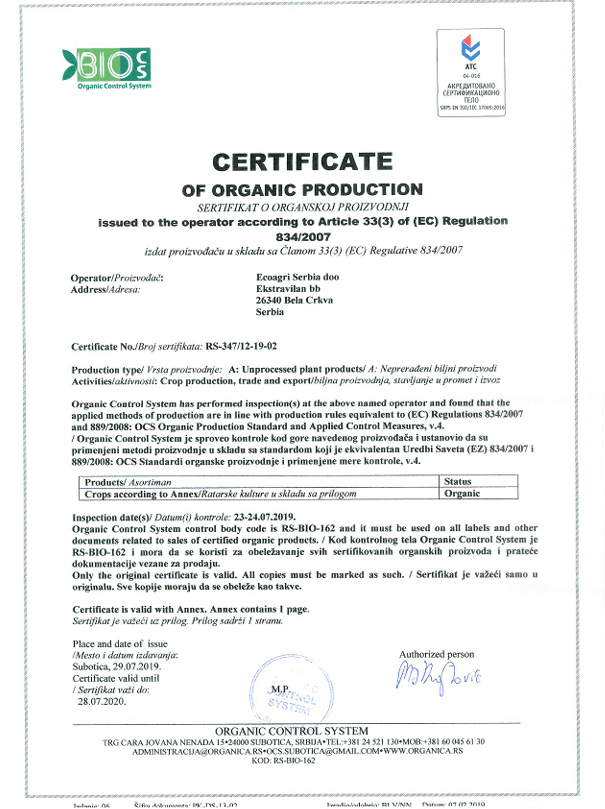
The only guarantee that a product is obtained through organic production methods is a certificate. By obtaining a certificate from an authorized organization, the producer earns the right to use the national “organic product” mark and the certification body’s logo on the product label.
By purchasing a product bearing the “organic product” label, consumers can be certain that:
– at least 95% of the ingredients of this product are of organic origin;
– the product had a strict control process and has been certified in accordance with regulations by a certification body supervised by the Ministry of Agriculture and Environmental Protection;
– the product comes directly from the producer and must be packaged in the prescribed packaging.
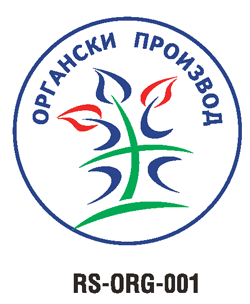
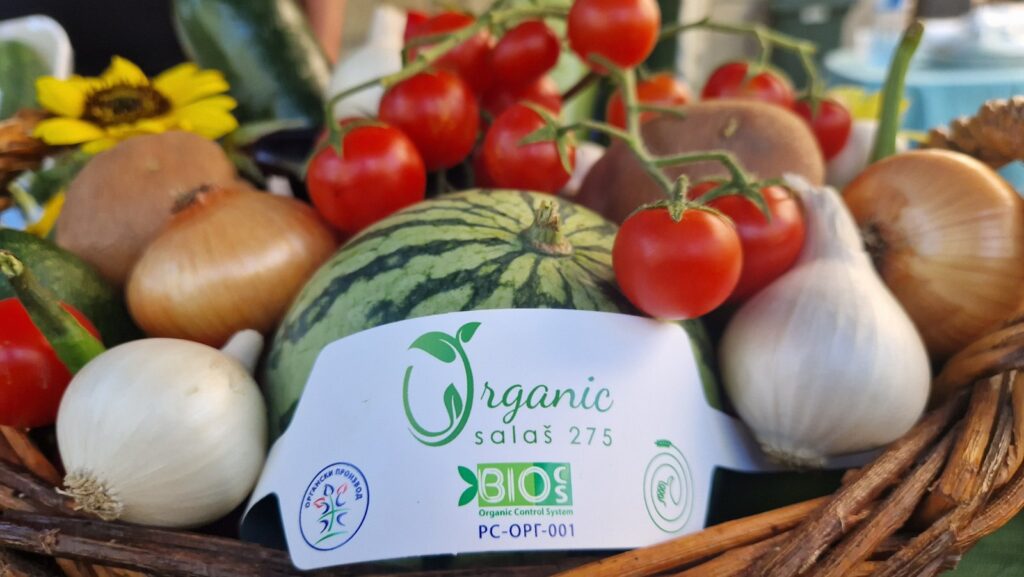
In accordance with the above, every consumer should pay attention when buying organic products to ensure that the label clearly displays the national “organic product” mark and the code of the authorized control organization (example: RS-ORG-001). In addition, the product must also display the code of the certification body that guarantees the organic status of products in the Republic of Serbia.

Organic products originating from the European Union and those exported to it must carry the “Euro-leaf” logo, whose design represents the connection between Europe and nature, consisting of 13 stars arranged in the shape of a leaf on a green background.
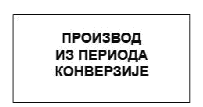
Producers who are in the conversion period can also obtain a logo for labeling their products that reads “product from the conversion period,” along with the code or logo of the authorized control organization. This highlights that they are transitioning from conventional to organic production and that these products are produced according to the principles of organic farming.
When it comes to primary products and sales at farmers’ markets, each producer is required to have a valid certificate issued by an authorized control organization and to present the certificate for inspection if necessary. This document serves as proof that the products have been produced in accordance with organic production standards and have undergone all necessary inspections. In this way, consumers can be confident that they are purchasing a truly authentic organic product, rather than a conventional product that is merely marketed as “organic.”