In Novi Sad, on May 21, 2025, within the framework of the International Agricultural Fair, the Organic Producers Business Meetings were held and organized by the Vojvodina Organic Cluster. Gathered in the hospitable atmosphere of the Chamber of Commerce of Vojvodina, we discussed matters that unite us: responsible food production, soil conservation, and community development.
The event was opened by the project manager of VOC, who emphasized that personal contact and the spoken word are precisely what the sector, which otherwise lives in dialogue with nature, lacks today. The attendees were then greeted by Mladen Petković, Secretary of the Agricultural Association at the Chamber of Commerce of Vojvodina, who conveyed that institutions in Vojvodina see organic agriculture as an important direction for the future: “Our task is to provide a stable space for the sector’s growth, both through support and through recognizing the value that organic producers bring to society.”
In the introductory part of the program, Dr. Brankica Babec, Head of the Project Activities Sector at VOC, presented two significant European projects in which the Cluster itself participates – EINSTEIN and ClimaPannonia. In both projects, VOC plays an active role in connecting scientific results with practice on the ground. “As a cluster, we must be a bridge between what researchers discover and what farmers can apply. Our role is in that translation – and in supporting the rooting of innovations in practice, not in a drawer,” emphasized Dr. Babec.

That organic production does not lag behind technology was confirmed by MSc Boris Savović from the company Dron Spray, who spoke about the use of drones in organic production. His presentation demonstrated how precision technology can assist in monitoring and treating plants, all in accordance with the strict rules of organic production. “We do not change nature – we just see it better. This gives us greater control, but also greater responsibility,” Savović emphasized, and several producers in the audience immediately asked specific questions about the possibility of applying this technology in their own production.
Rajko Lazić from Prima Bio Solutions spoke about plant protection products approved for use in organic agriculture. His presentation was concrete and practice-oriented – from product selection to legal requirements and field experiences. “Our goal is not just to sell a product, but to be sure that it works under real conditions and that the producer achieves results,” Lazić said, with discussions continuing after the presentation, accompanied by exchange of contacts.
After a short coffee break, the program continued with a lecture by Dr. Kristina Kalkan from the Biosens Institute, who reminded attendees of the key – and often overlooked – role of soil. Within the framework of the civic initiative project titled “Cultivating Soil Connectivity,” through examples of research and practice, she spoke about how microorganisms in the soil affect plant resistance and system stability. “Good soil does not only mean the appropriate chemical composition. It is a living system. And we are partners, not owners,” she said, explaining the broader context of the project she leads.

One of the most interesting moments of the event was the presentation by Dr. Mirko Đorđević from the Institute for Biological Research “Siniša Stanković,” who also introduced the citizen science project “Obtectus Finders“. He guided the audience through the world of old bean varieties, speaking not only about genetics but also about the cultural value of seed preservation. “This is not a story about beans – it is about the relationship to heritage, to that which cannot be bought, but must be preserved and understood,” emphasized Đorđević. The audience rewarded him with applause that lasted longer than usual.

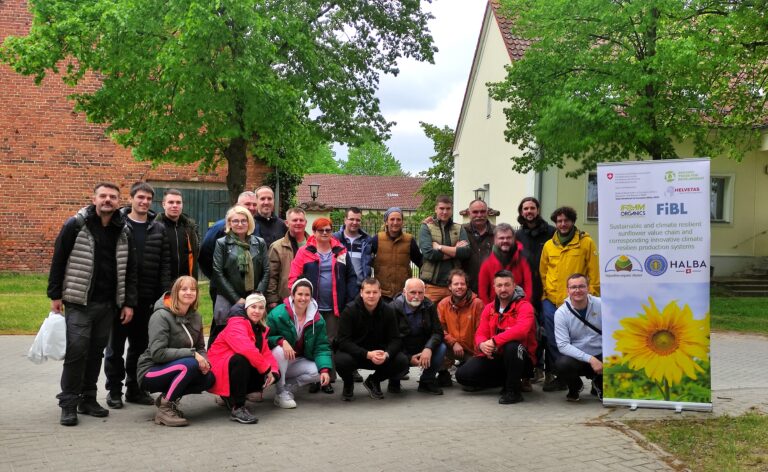
Guests from Macedonia and Germany brought a strong international spirit to this year’s meetings, not only through their presence but also through active participation in discussions and exchanges with local producers and partners. Their visit was organized within the Erasmus+ project “Innovative Operational Plans for Sustainable Agriculture” (Project Reference: 2024-2-DE02-KA210-ADU-000278361), which connects organizations from different countries to exchange knowledge and experiences in adult education, with a focus on organic agriculture. During the meetings, guests from these countries shared examples from their national practices – ranging from producer support models to innovative educational tools and local initiatives to strengthen short supply chains. Their insights further enriched the conversations and opened space for comparing systems, challenges, and solutions. In informal talks that continued after the official program, initial steps toward concrete forms of cooperation were already agreed upon – from joint trainings and exchanges of young producers to potential partnerships in European calls.
“We feel at home here. We see genuine dedication, but also a desire to move forward, together,” said Boško Nelkoski from the EKO Lešnik association, adding that “events like this are rare – warm, open, and focused on practical results.”

In the closing part, a brief discussion and informal socializing over a cocktail took place, after which the participants were organized to visit the fair and Hall 1a, the exhibition of organic products. The fair area became a continuation of the dialogue – featuring both domestic and imported organic products.
VOK warmly thanks everyone who participated, shared their knowledge and time, and contributed to making these meetings remembered as another step toward building a strong, open, and connected organic community.